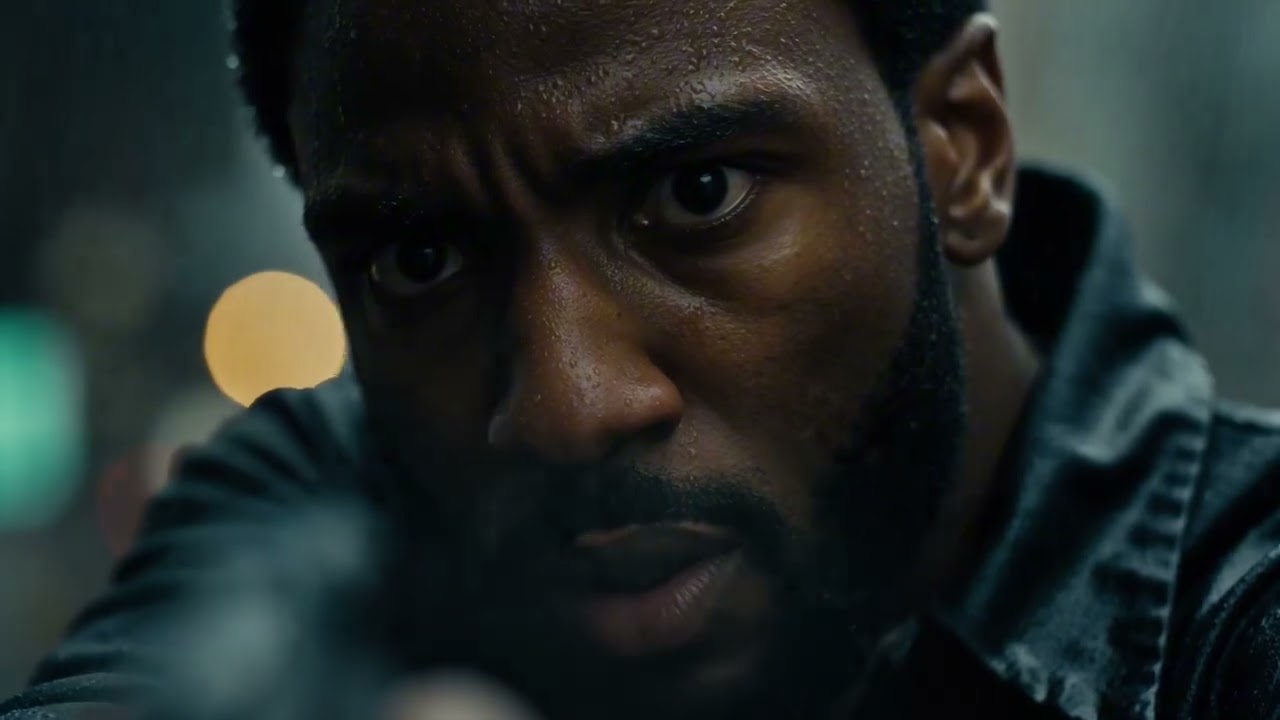
A Novel of Choices · Detroit, 2019
Counterfeit
Dreams
Every empire begins with a decision no one else hears. In this story, you make that call.

Every empire begins with a decision no one else hears. In this story, you make that call.
Detroit, 2019. You've built something real from nothing — a network, a system, a reputation that travels by word of mouth alone. Tonight, a stranger makes you an offer that could change everything. What you do next writes the rest of your story.
Counterfeit Dreams is a choose-your-own-path crime novel that puts you inside the choices that define a man's fate. Every decision branches. Every branch has consequences. And every story ends differently — because you are different every time you open it.
Written in the tradition of the great interactive novels — updated for readers who want literary weight, not just narrative gimmick.
"Every choice leaves a version of you behind. The version ahead is the one you choose now."
— Counterfeit Dreams
Read the opening chapter. Make your first real choice. See how the paths diverge.
Detroit, 2019
You've built something. Protected it. Kept it quiet. Tonight, everything changes. Your choices write the ending.
The city doesn't announce itself. Detroit just is — concrete and quiet at 11 PM, the kind of quiet that isn't peaceful, just patient. You've learned to move inside it without disturbing it.
The operation you've built isn't loud. It was never meant to be. You started eighteen months ago with three contacts, a storage unit on Eight Mile, and a system so clean it barely left a shadow. Now it's twelve locations, two trusted lieutenants, and a rhythm that runs itself like a second heartbeat you've learned not to think about.
You do what you do because you're good at it. And because the money is real.
Tonight, though, something is different. A name came to you through DeShawn — a middleman you trust the way you trust weather reports. Useful, not guaranteed. The name is Jason. Jason wants to talk business. Jason has resources.
You've been in this parking garage on Woodward for eleven minutes. The second-floor level, northwest corner, facing the exit ramp. Same spot every time. Old habit. The meeting is in four minutes.
Jason arrives in a dark blue Impala, government plates. You clock it immediately. Your hand doesn't move toward anything — you've been in this business long enough to know that reaching is how men get shot. Instead you watch. You read.
He steps out alone. Medium height, good coat, no jewelry. A man who doesn't want to be looked at twice — which means he's either very careful or very connected. The distinction matters.
He finds your car without hesitating. Somebody told him what you drive.
"You're smarter than I expected," he says, sliding into the passenger seat. "That's good. I need smart."
He lays out the proposition in seven minutes flat. A distribution arrangement. Protected territory. Volume you've never touched before. He has buyers. He has silence. He needs infrastructure — yours, specifically. He's heard your name through enough channels that he made the drive from Lansing to say it to your face.
The number he names is the kind that doesn't leave your head. You know it the moment he says it. You also know what it costs to step into something this size. Scale changes everything: the money, the risk, and exactly who starts watching you.
You have until midnight to give him an answer. That's twenty-two minutes.
"I can work with part of it," you tell Jason. "Not the whole package. I take what fits my current structure and we see how it runs."
He studies you for a moment. Not disappointed — calculating. "You're more careful than I was told."
"Careful is how I'm still here."
He agrees. The handshake happens in the dark of the parking garage and you drive home knowing you've done the smart thing — or the cautious thing. You're still deciding whether those are the same.
Over the next six weeks, the limited arrangement runs cleanly. The money comes in on schedule. Jason doesn't push. Your people don't complain. Everything functions the way it did before, only the deposits are slightly larger.
But in the fourth week, something changes. A car you don't recognize parks on your block for three hours. It leaves before you can get a plate. You write it down in the notebook you keep in your nightstand — the one nobody knows about. You write the date, the time, the color, and the make.
Then you wait to see if it comes back.
"One territory," you tell him. "I pick which one. We run it ninety days clean before I touch anything else."
Jason nods slowly. Like he expected negotiation and respects that you brought it. "What's the territory?"
"Northwest. I already have the infrastructure." A partial truth — close enough to protect the real answer.
He agrees, and you're surprised how quickly. Either he's flexible or this was the arrangement he wanted all along and just needed to see if you'd fight for it. You can't decide which is more concerning.
The ninety-day trial runs well. DeShawn handles the new volume without complaint. The money flows in channels you recognize. Jason checks in every two weeks, never more, exactly as promised. You start to think this might actually be the right play.
Then in week seven, your contact Andre mentions that someone from Lansing has been asking around. Not about you specifically. About the territory. About who owns the northwest side.
You call DeShawn that same night. You need to know if he talked. You need to know before you decide what to do about it.
"I'm in," you say. The words come out steady. That's important — how they come out. "All of it. We move when you're ready."
Jason's expression doesn't change, but something shifts in the car. The air gets a little heavier. "You sure? This is a different weight class than what you're running now."
"I know what I'm running. I know what I can handle."
He tells you the timeline. Three weeks to restructure your delivery points. Six weeks to full operational volume. The number he gave you earlier was the conservative estimate — if things run smoothly, it's higher. You write nothing down. You've trained yourself to keep the important things in your head where they can't be found.
You drive home on I-94 with the windows down even though it's cold. You need the air. The kind of decision you just made doesn't leave room for second-guessing — so you lock it behind a door in your mind and move forward.
Forty-eight hours later, one of your current suppliers calls to say he's heard your name in a room he wasn't supposed to be in. He doesn't know the context. He's calling you out of loyalty.
The operation has been at full scale for less than two days and someone is already talking.
Available in Paperback, Hardcover, and Digital editions.